Showing posts with label Photo Tidbits. Show all posts

Friday, January 25, 2013

Last Day Reflections

What did you learn about photography that you didn't know before? 
I thought that I knew much more about photography before this semester than I actually realized that I did. My basic understanding about aperture and shutter speed and ISO was completely amplified to a point that I'm actually embarrassed that I thought I knew anything at all before. It's not only knowing how to execute the tricks - it's actually understanding why they work the way they do. It's remarkable how much knowing those things can help you improve. Going off of that, I'm so happy that we got to work with photoshop this semester. I have been wanting to play with photoshop for so long now, so I'm delighted that we got a chance to do that. Playing with curves is my favourite thing to do, I've decided. Yes. But, the biggest thing I've thought about throughout the duration of this class is the concept of beauty. Things don't really have to be 'conventionally' beautiful to be beautiful, you know? And that just makes the world seem a little bit more bright. 

What did you learn about yourself in this semester?
I learned that I am easily inspired. 
Perhaps that can be attributed more to the vast number of inspiring things that one can come across, but since the beginning of the year, I've certainly learned to open my eyes more to the little things that are perfectly brilliant. 

What do you wish we had done that we did not? 
I sort of wish that we had spent more time doing photographs on film. As annoying as it is to have to share the dark room with thirty other people, (and as convenient it is to just plug everything into a computer to work with) I was really excited to be able to work with film. It might have been fun to have a two semester class, the first semester focusing on digital and learning all the little tricks on a device that we can easily redo mistakes, and then second semester moving to film and taking all those techniques and applying them to the more tangible device where every shot counts. Yes. Doing things on film is just so gratifying, I think. Developing a photo well just gives you a tremendous sense of self satisfaction. 

What was your struggle? 
At the beginning of the year, I definitely tried to hard to 'be a photographer'. I thought too much. Overthinking isn't necessarily something that needs to be done with photography, I'd say. But I was letting that get in the way. 

What did you conquer?
Like I said, the overthinking thing was really a bother. But, I got over my need to overanalyze. After looking at all the different photographers we looked at, and at all the different photos we looked at, and all the little inspirations we were shown, it's really apparent that you don't need to think. You just need to do.
I hope I am able to maintain that mindset. 
I think I can. 

Sunday, November 4, 2012

Beauty

How would you define beauty in photography? Can something ugly be photographed and considered beautiful? Why? How? 

I'm going to start with the second part of this. See, my issue with this question is that it implies that things can be ugly. This is just not something I can bring myself to agree with. If you think about it, there isn't really anything that every single person who looks at it can agree to be 'ugly'. There are different aspects of different things that different people will find beautiful. I really think it's impossible to label anything as 'ugly'. The world is a gorgeous place.

So, for the beauty thing.
A beautiful photo is a photo that makes you feel something.
Whether it be happiness or sadness or nostalgia, or whether it makes you uncomfortable or it just makes you calm down, a photo that triggers emotion is a photo that is beautiful. 

Leanne Miller Photography
Leanne is a good friend, and I admire her photography so very much. These photos are a collection from her 365 project of last year. I find them all very beautiful. 


Sunday, October 21, 2012

Alfred Stieglitz

- Alfred Stieglitz was a photographer who was prominent around the turn of the century. He is credited with being one of the most influential people in photography on account of his work promoting the art as a legitimate form of art. He was not only an exceptional photographer himself, but he helped other people see the brilliance of photography. 

Alfred Stieglitz - Grapes
- This photograph is one of my favourites of his. I really dig the contrast of the hands and arms against the window; it's dramatic, and I love it. The lighting is wonderful here. The darkness of the hands against the brightness of the outside just give off a good vibe. Also, grapes. There is not often a time when you see someone holding a bunch of grapes up to a window, and the absurdity of it all pleases me a lot.


Georgia O'Keeffe - Music
- After a first marriage, Stieglitz became involved with a painter named Georgia O'Keeffe. Stieglitz first met her through her art; he was presented with a portfolio of her art and fell in love with her before he had ever met her. Eventually they were introduced, and Stieglitz went basically head over heels for her. He began having her over to photograph while his wife was away, and, after a while, he was asked to leave the house by his distressed wife. O'Keeffe became Stieglitz's photographical inspiration: he took hundreds of portraits of her. O'Keeffe, too, was inspired by Stieglitz: her paintings shifted from primarily water colour to to oil, and she was recognized as part of the American Modernist movement. They were very much in love. 

Sunday, October 7, 2012

Brownie Camera


What is a brownie camera? 
I'm glad you asked! Well, a brownie camera is this nifty little contraption that made photography cheap and easy for the everyday person. It was a little box with a fixed lens inside that took photos on rollfilm. All one had to do was press a button, and voila! Photo. 

File:Beau Brownie.jpg
But seriously, look how adorable
  
Who invented this thing anyway? 
Well, it was originally invented by George Eastman - a Kodak guy - in 1888, but the camera itself was most popular from the early 1900s all the way into the sixties. New and improved models kept coming out and people of all ages were able to enjoy using them. 

Why on earth was this camera important? 
It was a fantastic little piece of photographic invention, I tell you. The fact that they were so inexpensive and easy to use made photography a really accessible hobby for people. Anyone could photograph their world, and that wasn't something that could really happen before the brownie camera. 

Monday, September 24, 2012

Photo tidbits

So, I have to admit that I hadn't a clue what all these things meant before now, but hopefully after you have read the following definitions, we'll both have a clearer understanding of these fancy photo words. 
Here goes nothing.


Daguerreotype. This was the first method that proved commercially successful in the photography industry, prominent in the 1700s and 1800s. In this method, a piece of paper was covered in a mirror-like combination of silver foil and copper. The nifty thing about this was that the photographs captured were direct positives. It was awfully helpful on account of the fact that it was more advanced than the camera obscura method, which required much more time an effort.  


Albumen. Album was the first method of making a photo from a negative. The secret ingredient in this process was egg whites - how versatile the egg is, eh?. The piece of paper was coated in egg white and then dipped into the regular silvery stuff. Alas, this method only lasted from the 1850s to the turn of the century.


Stereograph. Stereographs were the world's first attempt at 3D images; they were quite popular in the mid and late eighteen hundreds. The graphs themselves were two images set side by side, viewed by magic stereoscope glasses.


Carte de Visite These were the first trading cards, so to speak. After Napoleon III had his photograph done on one of these, these little photographs became all the rage with friends and travelers and who not. They became a phenomenon! Usually, they'd be created using the albumen method. Yes yes. 


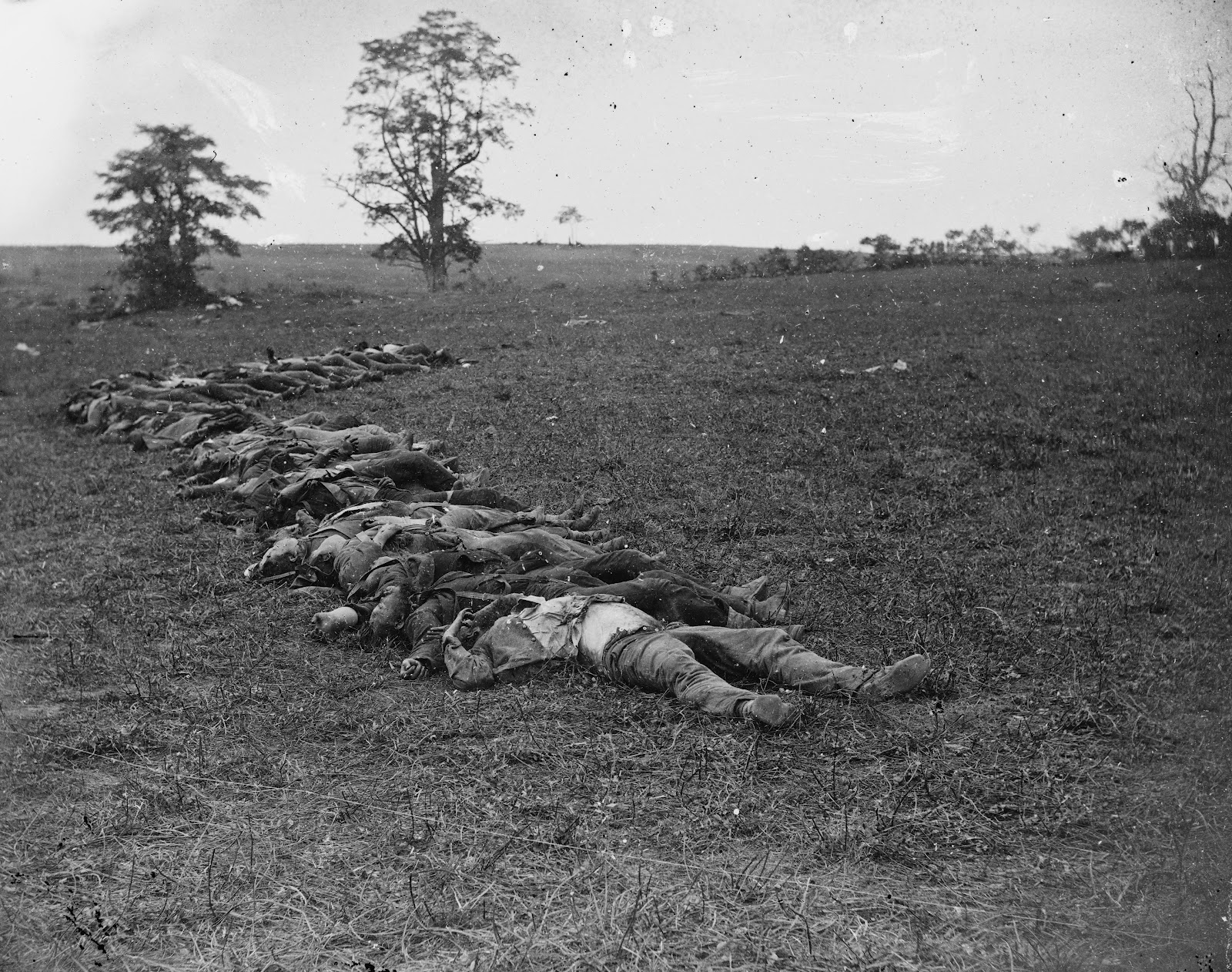
Famous Photogs: Alexander Gardner and Matthew Brady


Alexander Gardner was a Scottish photographer (Scottish Power!) who was famous for his photographs of the civil war and Abraham Lincoln.  


Matthew Brady was also famous for his civil war photos, but he's also credited for being the father of photojournalism.


Saturday, September 15, 2012

Nicéphore Niépce


Photo Tidbit of The Day

Actual photographs are a relatively new thing to people when you look at our entire history. It took many folks to figure out a sophisticated, repeatable way to go about it. But, the oldest surviving photograph is credited to the French inventor, Nicéphore Niépce, who took it in 1826. Using the camera obscura method, this photo was captured at Saint-Loup-de-Varennes. After eight hours of exposure, a picture was projected onto a 20 x 25 cm surface, resulting in the first ever permanent photograph in the history of ever. 

Three cheers for Mr. Niepce! 

*cue cheering*